Cabinets cover more of your kitchen than any other surface, so their style sets the look of the whole room. The style mostly comes down to the door: its shape, its profile, and how it sits on the cabinet box. Here are the main kitchen cabinet styles, the construction types behind them, and how finishes hold up in a desert home.
The Short Answer
The most common kitchen cabinet styles are Shaker (a recessed panel in a square frame) and slab (a flat, minimal door). Raised panel, inset, beadboard, glass-front, and fluted designs fill more specific looks. Under the door, cabinets are built either framed or frameless, which affects both appearance and storage.
| Style | What it looks like | Feel | Cleaning |
|---|---|---|---|
| Shaker | Recessed flat panel inside a square frame | Transitional, timeless | Easy; dust can sit on the frame edge |
| Slab (flat-panel) | One flat piece, no detail | Modern, minimal | Easiest |
| Raised panel | Center panel raised with a shaped edge | Traditional, formal | Moderate; detail collects grime |
| Recessed panel with detail | Shaker-like with a decorative edge | Traditional | Moderate |
| Beadboard | Vertical grooved planks in a frame | Farmhouse, cottage | Harder; grooves collect grime |
| Inset | Door sits flush inside the face frame | Custom, furniture-like | Easy |
| Glass-front | Frame with a glass panel | Display, light | Glass needs regular cleaning |
| Fluted or reeded | Vertical ribs or grooves | Contemporary, textured | Moderate |
The Door Styles
Shaker
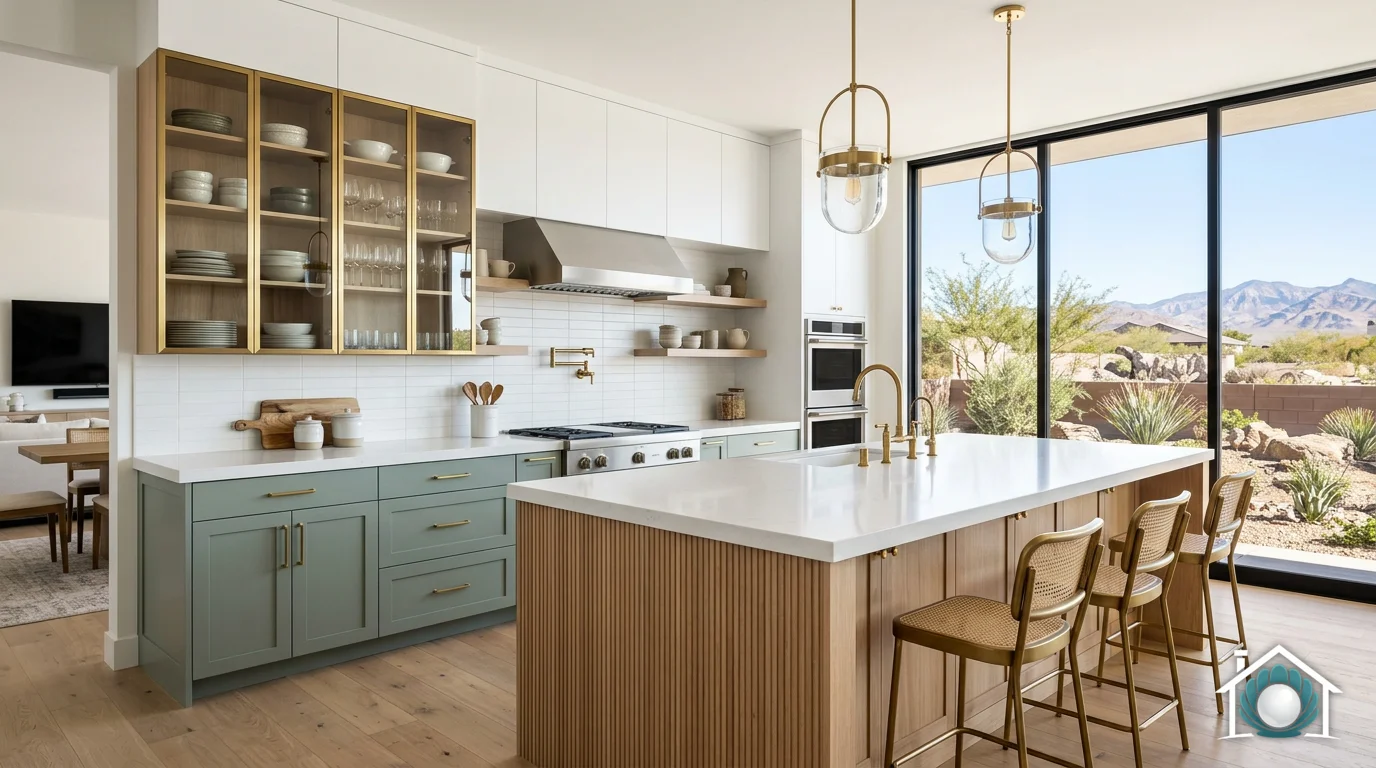
Shaker is the most popular cabinet style in remodeled kitchens, and for good reason. The simple square frame and flat recessed panel work in a modern kitchen with matte black hardware and in a traditional one with brass pulls. It takes paint well and does not date quickly. If you are unsure, Shaker is the safest choice.
Slab
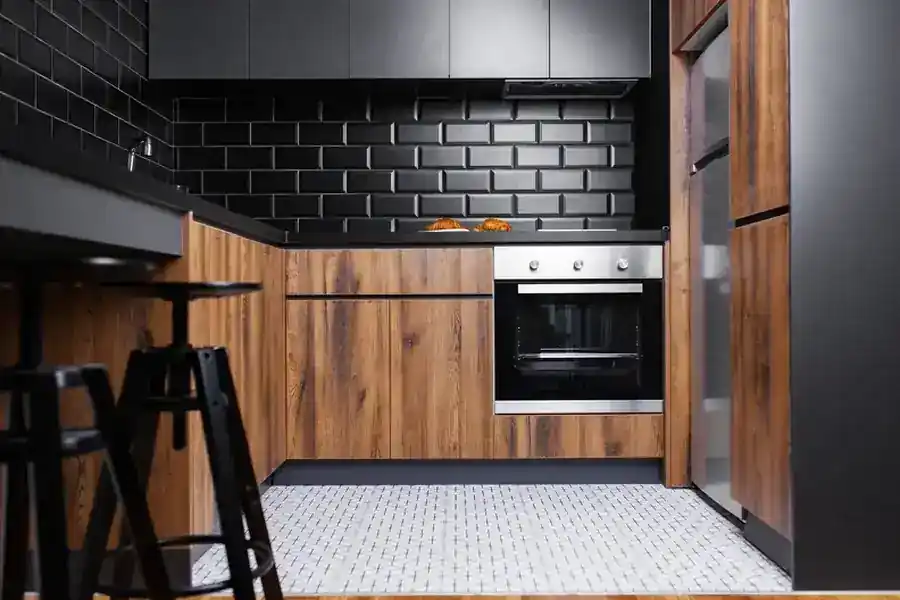
Slab doors are flat with no frame or detail. They suit modern and contemporary kitchens, especially in wood veneer, matte laminate, or high-gloss finishes. With no edges to collect grease or dust, they are the easiest door to clean. Handleless designs with integrated pulls or push-to-open hardware push the look further.
Raised panel
Raised panel doors have a center panel that rises toward you with a shaped edge. They read as traditional and formal, and they were standard in many valley homes built in the 1990s and 2000s. Many remodels replace them with Shaker or slab for a more current look.
Beadboard
Beadboard doors have vertical grooved planks inside a frame. They suit farmhouse and cottage kitchens. The grooves add texture but also collect grime near the range.
Inset
Inset doors sit inside the cabinet’s face frame, flush with the front, instead of covering it. The look is crafted and furniture-like, often paired with exposed hinges. Inset costs more because every door must be fitted precisely, and the frame takes a little storage space.
Glass-front
Glass-front doors use a frame with clear, seeded, or ribbed glass. A few on the uppers lighten a long wall of cabinets and show off dishes. Adding interior lighting turns them into a display feature.
Fluted and reeded
Fluted or reeded fronts have vertical ribs or grooves. They are a current favorite on islands and accent pieces, adding texture without color.
Framed vs Frameless Construction
The door style sits on one of two cabinet constructions:
- Framed cabinets have a solid wood face frame on the front of the box. Doors either overlay the frame (partial or full overlay) or sit inside it (inset). Framed construction is the traditional American standard and very sturdy.
- Frameless cabinets have no face frame. The doors attach directly to the box sides and cover the edges completely. They give slightly more usable interior space and wider drawer openings, and they suit modern designs.
Most door styles can be built either way, although inset requires a frame. Full overlay on a framed cabinet gets you close to the frameless look.
Finishes and Desert Light
The finish matters as much as the style in a Las Vegas kitchen with big windows:
- Painted cabinets offer any color. Quality catalyzed paint is durable, but white and light colors near sunny windows can shift over years of strong UV.
- Stained wood shows the grain and hides wear well. Very light natural woods can amber over time.
- Thermofoil (vinyl film over MDF) is affordable but can peel near heat sources such as ovens and in very hot rooms.
- Laminate and textured melamine are durable and consistent, common on slab doors.
Window coverings, solar screens, and UV-filtering glass on the sunniest exposures help any finish last longer.
Mixing Styles
A kitchen does not have to use one door style throughout. Popular combinations include Shaker lowers with slab uppers, an island in a contrasting color or fluted front, and a few glass-front uppers to break up a run of solid doors. Keep one element constant, such as the hardware finish or the main color, so the mix looks deliberate.
Cabinet Styles in Green Valley Kitchens
Many Green Valley homes in Henderson still have their original oak raised-panel cabinets from the late 1980s and 1990s. If the boxes are solid, homeowners can change the style without replacing everything: new Shaker or slab doors on the existing boxes, a painted finish, and new hardware. When the layout is changing or the boxes are worn, full replacement is the better option. Our cabinet refacing vs replacement guide compares the two.
If you are planning a kitchen remodel in Green Valley, start with how you want the room to feel, then pick the door. The door style carries through to the hardware, the countertop, and the backsplash.
Choosing Your Style
If you want a kitchen that will still look right in fifteen years, Shaker in a neutral color is hard to beat. If you want clean and modern, choose slab. If you want character, add an inset, glass-front, or fluted element on the island or a feature wall. For countertop pairings, see our guide to the types of countertops.
Pearl helps clients choose cabinet styles and finishes in their own kitchen light as part of every kitchen remodel. Request a free in-home consultation or call (702) 602-8385.