LVP and laminate look almost identical in a showroom. Both are click-together planks with realistic wood visuals, and both cost less than hardwood or tile. The difference is underneath, and in a Las Vegas home that difference matters. Here is how LVP vs laminate flooring compares and which one fits which rooms.
The Short Answer
LVP (luxury vinyl plank) is waterproof, quiet, and the safer pick for kitchens, bathrooms, and laundry rooms. Laminate has a harder surface that resists scratches better and often has a more convincing wood texture, but its fiberboard core can swell if water gets into the seams.
For most whole-home installs in the valley, LVP is the default. Laminate is a strong choice for dry rooms in homes with big dogs, or for homeowners who want the most realistic wood look in bedrooms and living areas.
| Factor | LVP | Laminate |
|---|---|---|
| Core | Vinyl (rigid SPC or WPC) | High-density fiberboard |
| Water | Waterproof core | Water-resistant surface at best; core can swell |
| Scratches | Good, depends on wear layer | Very good, hard melamine top |
| Dents | Can dent under heavy point loads | Resists dents well |
| Heat and sun | Expands with heat; needs gaps and shade | More dimensionally stable in heat |
| Sound | Quieter | Can sound hollow without underlayment |
| Feel | Slightly softer and warmer | Firmer |
| Best rooms | Whole home, kitchens, baths, laundry | Bedrooms, living areas, offices |
How Each One Is Built
LVP is built from layers: a vinyl or rigid core (stone-plastic composite, SPC, or wood-plastic composite, WPC), a printed design layer, and a clear wear layer on top. Because no part of it absorbs water, a spill or a leaking dishwasher does not ruin it.
Laminate has a high-density fiberboard (HDF) core with a photographic layer and a hard melamine wear layer. Better laminates add water-resistant coatings and tighter joints, but the core is still wood fiber. If water sits on the seams long enough, the edges can swell and do not shrink back.
Water: The Deciding Factor
If the room has water, choose LVP. Kitchens, bathrooms, laundry rooms, and entries from the pool all see standing water sooner or later. With a waterproof core you can wipe it up and move on. With laminate you can usually do the same if you are quick, but a slow leak under a sink or refrigerator can damage a whole run of planks.
Durability: Scratches and Dents
Laminate’s melamine top is very hard, so it resists claws, grit, and chair legs well. That makes it a good option in homes with large dogs. LVP’s scratch resistance depends on the thickness of its wear layer. A thicker wear layer lasts longer, and many LVP products list it in mils. Vinyl is softer than laminate, so heavy furniture on narrow legs can dent it. Furniture pads solve most of that.
Heat, Sun, and Las Vegas Homes
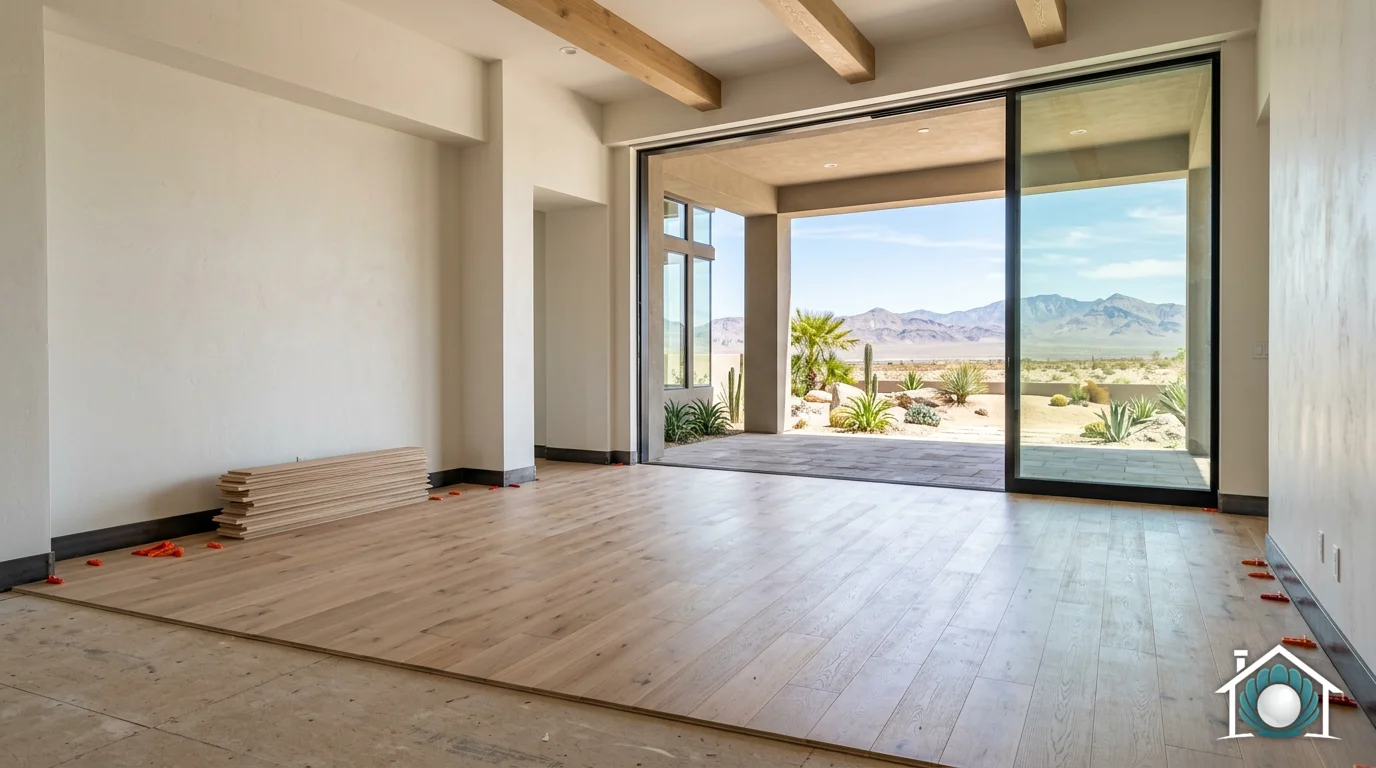
Desert heat is where the two behave differently. Vinyl expands as it warms, and floors next to sliding glass doors and west-facing windows can get very hot in summer afternoons. Rigid-core LVP is far more stable than older flexible vinyl, but it still needs:
- Acclimation in the home before installation
- Proper expansion gaps at walls, hidden under baseboards
- Window coverings or solar screens on the sunniest exposures
Laminate is more dimensionally stable in heat, but very dry air can make it shrink slightly at the seams. Either way, follow the manufacturer’s installation guide; some LVP warranties set limits on direct sun exposure. Our guide to solar screens for Las Vegas windows covers one of the simplest ways to protect any floor from summer sun.
Comfort, Sound, and Looks
LVP is quieter underfoot and feels slightly warmer and softer. Laminate can sound hollow without a quality underlayment. Laminate often has deeper embossing that tracks the printed grain, so it can look and feel more like real wood up close. High-end LVP has closed much of that gap.
LVP and Laminate in Paradise Homes
Paradise has a wide mix of housing: older single-story ranch homes, condos and townhomes, and newer infill. Many of those homes have tile in the wet areas and worn carpet in the bedrooms, and replacing the carpet is one of the most common flooring projects there. For condo and townhome owners, check your HOA’s rules first. Many attached-home communities require an underlayment with a specific sound rating, which affects both LVP and laminate.
Running one floor through the whole home makes a smaller Paradise home feel larger, and that usually points to LVP, because it can continue into the kitchen and bathrooms without a change in material. If you are planning flooring in Paradise, the condo rules and the sun exposure on each room are the first two questions to answer.
Which Should You Choose?
Choose LVP if the floor runs through kitchens, bathrooms, or laundry, if you want one continuous floor through the whole home, or if quiet matters. Choose laminate for dry rooms where scratch resistance or the most realistic wood texture matters more. And if you are also considering tile or hardwood, our guide to the best flooring options for Las Vegas homes compares all of them.
Pearl installs LVP, laminate, tile, and hardwood across the valley, with proper acclimation and expansion details for desert conditions. Learn more about our flooring services, request a free in-home estimate, or call (702) 602-8385.