The west-facing windows are the ones that matter. By 2 PM on a clear July day, the glass in a sun-loaded Las Vegas window can hit 130 degrees on the inside surface, and the sheer radiant heat coming off it heats the room behind it for hours after the sun moves off. Air conditioning fights the heat after it is already inside. Solar screens stop most of it before it ever reaches the glass.
Solar screens are one of the highest-return upgrades a Las Vegas homeowner can make to an existing home. They do not require permits, do not affect the HVAC system, do not change the look of the interior, and pay for themselves in cooling costs over a few summers. They are also one of the products with the widest quality range in the market, which is why a [$300] online order and a [$1,500] professional install can produce wildly different results from the same window. Here is what actually works in this climate, what to look for, and how solar screens compare to the alternatives.
How Solar Screens Actually Work
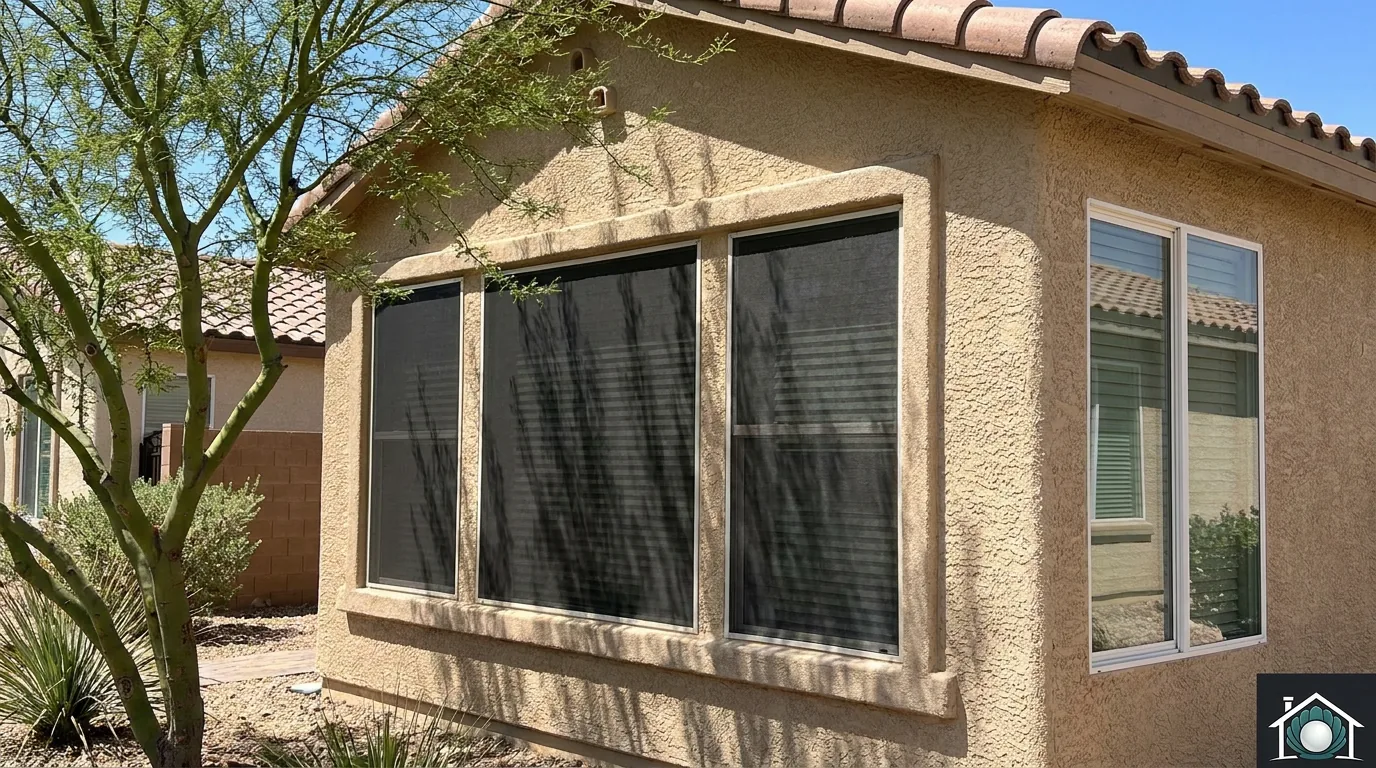
A solar screen is a tightly woven fabric mesh stretched over an aluminum frame and mounted to the exterior of the window. The mesh is engineered to absorb and dissipate solar radiation before it ever reaches the glass. A small amount of light still passes through (usually 10 to 30 percent depending on the mesh openness factor), which preserves the view from inside; the rest of the radiation is reflected, absorbed by the screen fabric, and then dissipated to the surrounding outdoor air rather than transmitted through the window.
The key word is “exterior.” A solar screen that mounts on the inside of the window does not work nearly as well, because the radiation has already passed through the glass and is now trapped inside the home. Same idea with curtains and interior blinds - they help with glare and somewhat with comfort, but they do not stop the heat from entering. The window itself is the hot surface that radiates into the room. Stopping the radiation outside the glass is what makes the system effective.
A typical west-facing Las Vegas window without screens transmits roughly 70 to 85 percent of the solar heat hitting it, depending on the glass type. With a quality solar screen at 80 percent shade rating, that drops to roughly 10 to 20 percent transmission - a 4-to-5x reduction in solar heat gain on that window.
Mesh Density and Why It Matters
Solar screen mesh comes in several openness ratings, usually expressed as a percentage of solar blockage:
- 70 percent mesh is the most open option. Lets through more light and preserves view clarity better, but blocks less heat. Common choice for north-facing windows that need only modest shading or for picture windows where view matters most.
- 80 percent mesh is the most popular all-around choice in Las Vegas. Strong heat blockage with reasonably good view-through. The standard recommendation for most south-, east-, and west-facing residential windows.
- 90 percent mesh is the most aggressive shading option in standard residential lines. Blocks the most heat. View-through is noticeably reduced and the interior reads dimmer when the screens are up. Right for the worst sun-load windows or for households that prioritize cooling over view.
- Specialty insect-resistant mesh combines solar blocking with finer weave for bug exclusion. Common for windows that also need to function as ventilation openings.
The 80 percent mesh is the right default for most rooms. The 70 percent mesh is a good upgrade for picture windows or windows with desirable views (the Strip skyline from a southwest window in a higher-elevation home, for example) where a tradeoff toward visibility makes sense. The 90 percent mesh is overkill for most situations and produces a visibly darker interior than most homeowners want.
Where Solar Screens Make the Biggest Difference
The orientation of the window determines how much benefit a screen actually provides. In Las Vegas:
West-facing windows take direct sun from roughly noon through sunset during summer, which is the worst possible exposure. The sun is at a low angle (which means it shines deeply into the room rather than just hitting the glass at a shallow angle) and the ambient temperature is at its daily peak. Solar screens on west windows produce the largest measurable comfort improvement and the largest cooling-cost reduction. Always start here if you are screening selectively.
Southwest windows are nearly as bad as west-facing windows during peak afternoon hours. South-facing windows take direct sun through midday, when the ambient temperature is high and rising. Both benefit substantially from solar screens.
East-facing windows take sun from sunrise to roughly mid-morning. The heat impact is real but smaller than the west exposures because morning ambient temperatures are 15 to 30 degrees cooler than afternoon temperatures. Solar screens on east windows are worthwhile but lower priority than west.
North-facing windows take essentially no direct sun in Las Vegas. They get diffuse skylight, which carries little heat. Solar screens on north windows offer minimal benefit and are generally not worth the cost or the small loss of view clarity. Most professional installs skip them.
Solar Screens vs the Alternatives
Solar screens are not the only option for managing window heat gain. The two main alternatives are window film and window replacement, and each is right for different situations.
| Option | Heat reduction | Installed cost (per window) | Reversible | Affects view | Affects window warranty |
|---|---|---|---|---|---|
| Solar screens (80%) | Very high (blocks before glass) | [$80 - $300] | Yes - remove for winter | Light tinting, slight blur | No |
| Window film | High to very high | [$120 - $500] | Difficult, often permanent | Tinting (varies by film) | Sometimes - check manufacturer |
| Replacement windows (Low-E, dual or triple pane) | Very high (best long-term) | [$700 - $2,500+] | No | None - fully clear glass | New warranty |
| Awnings or exterior shades | High when deployed | [$400 - $2,500+] | Yes - retract or remove | Variable depending on style | No |
Window film is the right choice when an unobstructed exterior look is a priority and removing screens for winter is unwanted. Solar screens are usually the better economic choice and are easier to remove seasonally. Full window replacement is the long-term answer when the existing windows are at end-of-life anyway, but it is typically 5 to 10 times the cost per window of a solar screen.
The practical pattern for many Las Vegas homeowners is to install solar screens now for immediate benefit, and budget for window replacement when the original builder-grade windows fail in 5 to 15 years.
Frame, Color, and Mounting
The frame matters more than people expect. A quality solar screen uses a powder-coated extruded aluminum frame that resists warping and color fade. Cheap roll-formed aluminum frames warp under summer heat, which loosens the mesh tension over time. The frame should match the window trim or stucco color - the most common choices in Las Vegas are bronze, almond, white, and beige.
Mounting style affects warranty preservation and removability. The two main approaches are:
Hang-on mounts attach to clips or pins fastened to the existing window frame. Screens lift off cleanly for winter storage or for cleaning the windows. Preferred for windows still under manufacturer warranty.
Permanent screw-in mounts attach the frame directly to the window frame with screws. More secure against high winds, but require breaching the window frame and may void some manufacturers’ warranties. Common on older windows that are out of warranty anyway.
For new construction or recently replaced windows, ask your screen installer to use hang-on mounts unless the wind exposure of the home requires otherwise.
What It Costs in Las Vegas
A whole-house solar screen package for a typical single-story Las Vegas home (8 to 12 windows, sun-loaded exposures only or all exposures) generally falls in the [$1,500 - $4,500] range fully installed. A two-story home or a custom home with larger windows usually runs [$3,500 - $8,000]. Per-window pricing typically lands in the [$80 - $300] range depending on size, mesh quality, frame, and mounting style.
Bargain installs at half these prices often use thin mesh that fades or tears within a few summers, light-gauge frames that warp, or quick-mount methods that loosen at the perimeter and let air gaps form between the screen and the window. The product cost difference between a quality screen and a bargain screen is small; the difference in lifespan and performance is large.
Common Mistakes That Cost You Performance
A few patterns we see when homeowners are dissatisfied with their solar screens:
- Screening only the front of the house for curb appeal reasons, while the worst-loaded windows on the west or south side go unscreened. Result: cooling bill barely changes.
- Choosing 90 percent mesh on every window because more shade sounds better. Result: the home feels gloomy, and the bedroom and kitchen windows where natural light matters end up unusable for daytime tasks.
- Skipping the screen on a sliding patio door because it is large and “feels” different. Result: the patio door is often the single biggest sun-loaded glass surface in the home and an unscreened patio door will dominate the heat gain even if every other window is screened.
- Cheap pull-string installs from online retailers that arrive in the wrong size, get hand-fit at the window, and have visible perimeter gaps. Result: 30 to 50 percent of the rated performance is lost to air bypass around the screen edges.
- Installing screens in February and leaving them up through next winter. Result: the same screens that helped in summer block useful winter solar gain in January when the home benefits from passive heating.
A reputable installer measures every window, recommends a mesh density per orientation, mounts to preserve warranty when possible, and offers seasonal removal as a service if the homeowner does not want to handle it.
Maintenance and Lifespan
Solar screens are low-maintenance but not zero-maintenance. Twice-yearly rinsing with a garden hose removes accumulated dust and pollen that otherwise gets baked into the mesh by summer heat. Annual inspection at the perimeter mounts catches loose clips before mesh tension is lost.
Quality mesh fabric typically lasts 12 to 20 years in Las Vegas before fade or fiber breakdown becomes visible. Frames generally last longer than the mesh. A re-screen of existing frames runs roughly half the cost of a full replacement and is a common mid-life refresh.
Planning the Project
A whole-house solar screen install in Las Vegas typically takes 2 to 5 days from initial measure to install, with the screens themselves taking 1 to 3 weeks to fabricate after the order is placed. Spring (March through May) and fall (September through November) are the ideal windows for the install crew, but installs run year-round in this market.
Solar screens are often the best entry point for homeowners who want immediate cooling improvement without the cost of full window replacement. For homes with original builder-grade windows that are already nearing end-of-life, it can also make sense to combine the two projects - replace the worst-condition windows now and screen the rest. Pearl handles full window-related projects across the valley, including window replacement in Las Vegas and consultation on screening, film, and replacement strategy.
If you are planning to address the heat-load problem on your home, request a free in-home consultation or call (702) 602-8385. We will look at exposures, existing window condition, and your specific cooling concerns, and put together a realistic plan and quote.