The window replacement market in North Las Vegas is crowded with brands, materials, and marketing claims, and the choice between vinyl, fiberglass, and aluminum frame materials is one of the early decisions in any project. The three materials have different price points, different thermal performance, different aesthetic options, and different lifespans - and the marketing for each tends to oversell the strengths and undersell the trade-offs.
The honest framing is that all three materials can perform well in North Las Vegas when chosen at appropriate quality tiers and installed correctly. The wrong choice usually is not between materials but between premium and budget within the same material - a quality vinyl window outperforms a budget fiberglass window, and a quality fiberglass window outperforms a budget aluminum window. Within the right quality tier, the choice between materials depends on the home’s specific requirements: thermal performance, aesthetics, frame slimness, painted-color options, and budget. Here is what each material actually delivers.
What Each Frame Material Actually Is
Vinyl windows use frames made from polyvinyl chloride (PVC) plastic, often reinforced with internal metal or composite stiffeners for structural strength. The vinyl is formulated with UV stabilizers and heat resistance additives - modern vinyl is significantly more resilient than the vinyl windows of the 1990s and early 2000s. The frame profiles are typically wider than fiberglass or aluminum because the material requires more bulk for the same structural performance.
Vinyl windows have become the most common residential window choice across Las Vegas and most of the US because they offer good thermal performance, low maintenance, broad availability, and reasonable cost. Color is typically locked at the factory (white, beige, or a few standard tones); painting vinyl after the fact is possible but adhesion problems often surface over time.
Fiberglass windows use frames made from pulled fiberglass strands bonded with resin. The resulting frame material is dimensionally stable across temperature ranges, structurally strong (allowing slimmer profiles), and accepts paint or factory finishes that hold up well. The thermal expansion rate of fiberglass is similar to the glass itself, which means the frame and the glass expand and contract together rather than stressing the seal between them - a meaningful advantage in climates with significant temperature swings.
Fiberglass windows typically cost 30 to 60 percent more than comparable vinyl windows. The premium reflects the more expensive material and somewhat more involved manufacturing process. The market for fiberglass is smaller than vinyl, which means fewer brands and somewhat fewer style options, but the available options have grown significantly in recent years.
Aluminum windows use frames extruded from aluminum, typically with thermal-break construction (a strip of insulating material - usually polyamide or polyurethane - separating the inner and outer aluminum sections). Without the thermal break, aluminum conducts heat through the frame at high rates because aluminum is an excellent thermal conductor. With the thermal break, the frame conducts much less heat, though still more than vinyl or fiberglass.
Aluminum allows the slimmest visible frame profiles of the three materials and supports the largest single-pane glass sizes. These advantages make aluminum the preferred choice for contemporary architectural styles, oversized picture windows, and certain commercial-influenced residential designs. The trade-off is the thermal performance hit and somewhat higher cost than mid-tier vinyl.
Side-by-Side Comparison
| Attribute | Vinyl | Fiberglass | Aluminum (thermal-break) |
|---|---|---|---|
| Typical U-factor (Low-E) | 0.28 - 0.34 | 0.25 - 0.32 | 0.30 - 0.40 |
| Typical SHGC (Low-E) | 0.22 - 0.30 | 0.20 - 0.28 | 0.22 - 0.32 |
| Frame profile (visible width) | 2.5 - 4 inches | 1.5 - 3 inches | 1 - 2.5 inches |
| Color options | Factory only - limited | Factory or paintable | Factory finish - wide range |
| Custom colors | Rarely | Yes (paintable) | Yes (anodized or painted) |
| Maximum panel size (typical) | Up to 6 ft span | Up to 8 ft span | Up to 12+ ft span |
| Maintenance | Very low | Low | Very low |
| Thermal expansion vs glass | Different (some stress on seal) | Very similar (low seal stress) | Different (more stress on seal) |
| Typical cost per window installed | [$700 - $1,500] | [$1,200 - $2,500] | [$800 - $2,500] |
| Typical lifespan in N. Las Vegas | 25 - 40 years | 35 - 50+ years | 30 - 60 years |
| Best for | Most homes, value priority | Premium homes, slim profile, custom colors | Modern architecture, large openings |
The performance gap between premium tiers of any material is smaller than the gap between premium and budget within the same material. Quality matters more than category within reason.
Thermal Performance in Real North Las Vegas Heat
The U-factor and SHGC numbers tell most of the story but not all of it. In real-world North Las Vegas conditions, three factors affect how the different frame materials perform.
The first is heat conduction through the frame itself. Aluminum conducts heat at rates roughly 1,000 times higher than vinyl or fiberglass. Without thermal-break construction, an aluminum frame can transmit significant heat from outside to inside even when the glass package is high-performance. Thermal-break construction reduces this dramatically but does not eliminate it. Vinyl and fiberglass conduct very little heat through the frame, so most of the heat transfer happens through the glass (which is where the Low-E coating does its work).
The second is the seal between the frame and the insulated glass unit. The seal is where most window failures eventually occur - the gas fill between glass panes leaks out, condensation forms between the panes, and the window loses thermal performance. The seal lasts longer when the frame and the glass expand and contract together with temperature swings; it fails faster when the frame moves significantly more than the glass. Fiberglass matches glass expansion almost exactly. Vinyl moves more than glass; aluminum moves significantly more. This is one reason fiberglass windows tend to outlast vinyl and aluminum at the seal interface.
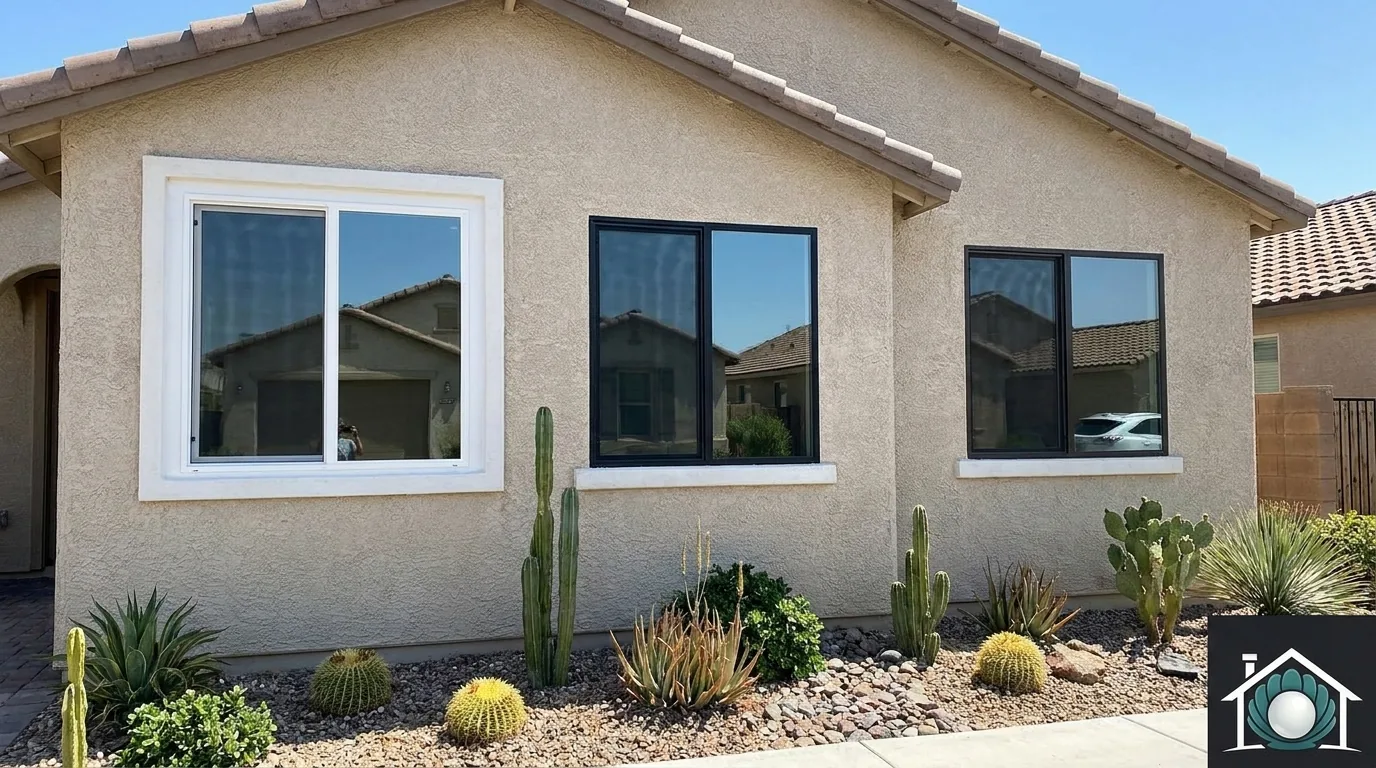
The third is solar gain on the frame itself, which causes the frame to heat up and conduct or radiate that heat to the interior. Light-colored frames absorb less solar heat than dark frames - a black aluminum frame in direct summer sun reaches significantly higher temperatures than a white vinyl frame in the same exposure. The thermal performance penalty for dark colors can be substantial on south- and west-facing windows.
For a North Las Vegas home with significant west-facing exposure, the combination matters: a quality vinyl window in a light frame color outperforms an aluminum window in a dark frame color, even if the spec-sheet numbers look similar.
Aesthetic Differences
The visual difference between the three materials is most noticeable in side-by-side comparison; in isolation, premium examples of each can look surprisingly similar.
Vinyl windows have wider frame profiles by necessity. A standard vinyl window frame is typically 2.5 to 4 inches wide, which means somewhat less visible glass area per window opening. Color options are limited to factory finishes - typically white, almond, or a few standard tones. Some manufacturers offer painted vinyl in additional colors, though paint adhesion to vinyl can be problematic over time. Vinyl reads as a residential window choice; in a contemporary design context the wider frame can read as visually heavier than desired.
Fiberglass windows offer slimmer frame profiles than vinyl (typically 1.5 to 3 inches wide) thanks to the material’s higher structural strength. The slimmer frames mean more visible glass area, which delivers a more contemporary look. Fiberglass paints well and holds painted color longer than vinyl, so custom exterior colors are a real option - useful when matching specific architectural styles or when an unusual color (like a deep bronze, navy, or charcoal) is desired.
Aluminum windows offer the slimmest profiles of the three materials, typically 1 to 2.5 inches wide. The minimal frame allows the maximum glass area per window opening, which produces the most contemporary or “commercial” residential look. Color options include the widest range - anodized aluminum finishes (silver, bronze, dark bronze, black), powder-coated colors, and custom paint. Aluminum reads as architectural or contemporary; in a traditional residential style it can read out of place.
For homeowners who want the cleanest contemporary look, fiberglass or aluminum delivers it. For homeowners who want a value-oriented residential window that does its job without drawing attention to itself, vinyl is the appropriate choice.
Long-Term Performance and Lifespan
All three materials can deliver decades of service when installed correctly. The longevity differences are real but less dramatic than marketing sometimes suggests.
Vinyl windows from quality manufacturers typically last 25 to 40 years in North Las Vegas before frame distortion, seal failure, or hardware wear becomes a significant issue. Lower-quality vinyl can fail in 15 to 20 years; premium vinyl can extend toward the upper end of the range.
Fiberglass windows typically last 35 to 50+ years. The material is more dimensionally stable, paint and factory finishes hold up longer, and seal stress is lower. Replacement is rarely needed within the original homeowner’s tenure.
Aluminum windows can last 30 to 60+ years depending on construction quality. Simple aluminum is durable but the thermal-break material (the strip of polymer between the aluminum sections) ages and can become brittle over decades. Quality aluminum with good gaskets and finishes performs at the upper end of the range; budget aluminum can have shorter useful life.
In all three materials, the failure mode is typically the seal between the glass panes (allowing fog to form between the panes) before the frame itself fails. Spec-quality glazing systems with quality gaskets last longer than budget glazing regardless of frame material.
Cost in North Las Vegas
Frame material affects per-window cost meaningfully:
Vinyl windows from quality manufacturers typically run [$700 - $1,500 per window] fully installed for standard residential sizes (typical bedroom, kitchen, or living room window). Larger windows, slider doors, or specialty shapes run higher.
Fiberglass windows from quality manufacturers typically run [$1,200 - $2,500 per window]. The premium reflects material and manufacturing cost; the visual and performance benefits over vinyl scale with the quality tier.
Aluminum windows range widely: thermal-break aluminum from major brands runs [$1,200 - $2,500 per window]; premium architectural aluminum (steel-look, oversized openings, custom finishes) runs [$2,500 - $6,000+] per opening.
A whole-house window replacement for a typical 2,000 to 2,500 square foot North Las Vegas home generally falls in:
- Vinyl: [$15,000 - $45,000]
- Fiberglass: [$25,000 - $65,000+]
- Aluminum (thermal-break): [$20,000 - $60,000+]
These ranges are general industry pricing for the North Las Vegas market and depend on specific brand, window sizes, opening complexity, and any framing or trim repair needed during installation.
When Each Material Is the Right Choice
A few decision frameworks that consistently point in the right direction:
Vinyl is the right choice when value is a priority and the home does not have specific architectural style or large-opening requirements that vinyl cannot meet. For the majority of typical North Las Vegas homes with standard window sizes and traditional or transitional architectural style, premium vinyl delivers excellent performance at the lowest cost. This is the right answer for most homeowners.
Fiberglass is the right choice when the home is higher-end or has specific design requirements that vinyl cannot meet - particularly slim frame profiles, custom exterior colors, or premium aesthetics. Fiberglass is also worth the upgrade for homes with significant west-facing exposure where the thermal expansion advantage and lower seal stress translate to meaningful long-term value. Custom homes, recent builds with premium finishes, and homes facing extreme exposures all benefit from fiberglass.
Aluminum is the right choice when architectural style or window size makes vinyl or fiberglass unworkable. Contemporary homes with large picture windows, sliding doors that exceed vinyl size limits, oversized architectural openings, or specific design language that requires very slim frames are the right candidates for aluminum. The thermal performance trade-off is real but manageable when the architectural requirements demand the material.
For homeowners who are uncertain, the value-conscious answer is quality vinyl. The premium answer is fiberglass. Aluminum is the specialty answer for specific architectural requirements.
Common Mistakes Worth Avoiding
A few patterns consistently produce window replacement projects that disappoint:
- Choosing the cheapest tier of any material to save cost. The difference between budget and premium within any material is usually larger than the difference between materials at the same tier. Premium vinyl outperforms budget fiberglass.
- Selecting frame color without considering solar gain. Dark frames on west-facing windows absorb significant heat. Choose lighter colors for sun-loaded exposures unless dark is an architectural requirement.
- Skipping the thermal break on aluminum. Standard aluminum windows without thermal-break construction perform poorly in this climate. Always specify thermal-break for residential applications.
- Choosing a window brand without local installer support. Window installation quality matters enormously; the best window installed poorly performs worse than a mid-tier window installed well. Check the local installer’s experience with the specific brand before committing.
- Mixing window materials across the same home for cost reasons. The result usually reads as patched rather than as a unified design choice. Either commit to one material throughout or have a clear architectural reason for mixing (custom large openings in aluminum, smaller windows in vinyl, for example).
Planning the Project
A whole-house window replacement project in North Las Vegas typically runs 6 to 14 weeks total from first consultation to finished install. The breakdown is 1 to 3 weeks for measurement and product selection, 4 to 10 weeks for manufacturing (varies significantly by material and customization), and 1 to 3 days of active install once windows arrive. Most install work happens from outside, so the home stays comfortable and habitable throughout.
The best install seasons are October through May, when daytime temperatures are mild enough that the temporary openings during install do not strain the home’s HVAC.
Pearl handles consultation, product selection, permitting, and installation for window replacement in North Las Vegas and the rest of the valley. If you are weighing frame materials for your project, request a free in-home consultation or call (702) 602-8385. We will look at the home’s exposures, talk through which material fits your goals and budget, and put together a realistic plan and quote.