A new patio is the visual anchor of a Summerlin backyard remodel, but the landscape around it does just as much work in deciding whether the whole space reads as a designed outdoor room or as a beautiful patio surrounded by neglect. The challenge with most Summerlin backyards is that the original landscape - usually some combination of struggling turf, a few foundation shrubs, and decorative gravel that has gone weedy - does not pair gracefully with a freshly remodeled patio. Either the landscape gets a refresh at the same time as the patio work or the contrast between the two becomes the most noticeable thing about the new outdoor space.
The good news is that drought-tolerant landscaping has come a long way from the bare-gravel-and-cactus aesthetic that gave it a poor reputation a decade or two ago. Done with intention and density, a Summerlin drought-tolerant landscape can look genuinely beautiful, qualify for substantial water rebates, eliminate the time and cost of weekly maintenance, and complement a new patio in a way that traditional turf never could. Here is how to think about pairing landscape with a Summerlin patio remodel.
Why Drought-Tolerant Pairs Well With Patio Work
The argument for drought-tolerant landscape is stronger when it is bundled with a patio remodel than when it is done as a standalone project. Several reasons:
The construction crew is already on site. Hardscape work, irrigation modifications, and grading happen at the same time, which means the dirt-disturbing phases of the project overlap. Doing the work in two separate projects six months apart means setting up and tearing down site protection twice.
The visual transition matters. A new paver or travertine patio that terminates abruptly at a struggling turf edge or an old gravel field reads as unfinished. The patio looks better when the landscape around it has been refreshed to match the new finish quality.
The irrigation system likely needs work either way. Older Summerlin irrigation systems often have failed valves, leaky drip lines, and zones that are no longer correctly calibrated for the current plant mix. A patio remodel is a natural moment to rework irrigation as part of the broader project.
SNWA rebates apply to the landscape conversion portion only, but they reduce the project cost meaningfully. Combined with reduced ongoing water bills, the math on bundled patio-and-landscape projects often comes out better than the patio alone.
The Plant Palette That Works
Several drought-tolerant plant categories perform reliably in Summerlin yards. A successful design typically combines structural plants (the anchors and architectural elements), color-accent plants (flowering species that add seasonal interest), ground cover (low-spreading plants that soften the spaces between), and trees (canopy that provides shade and scale).
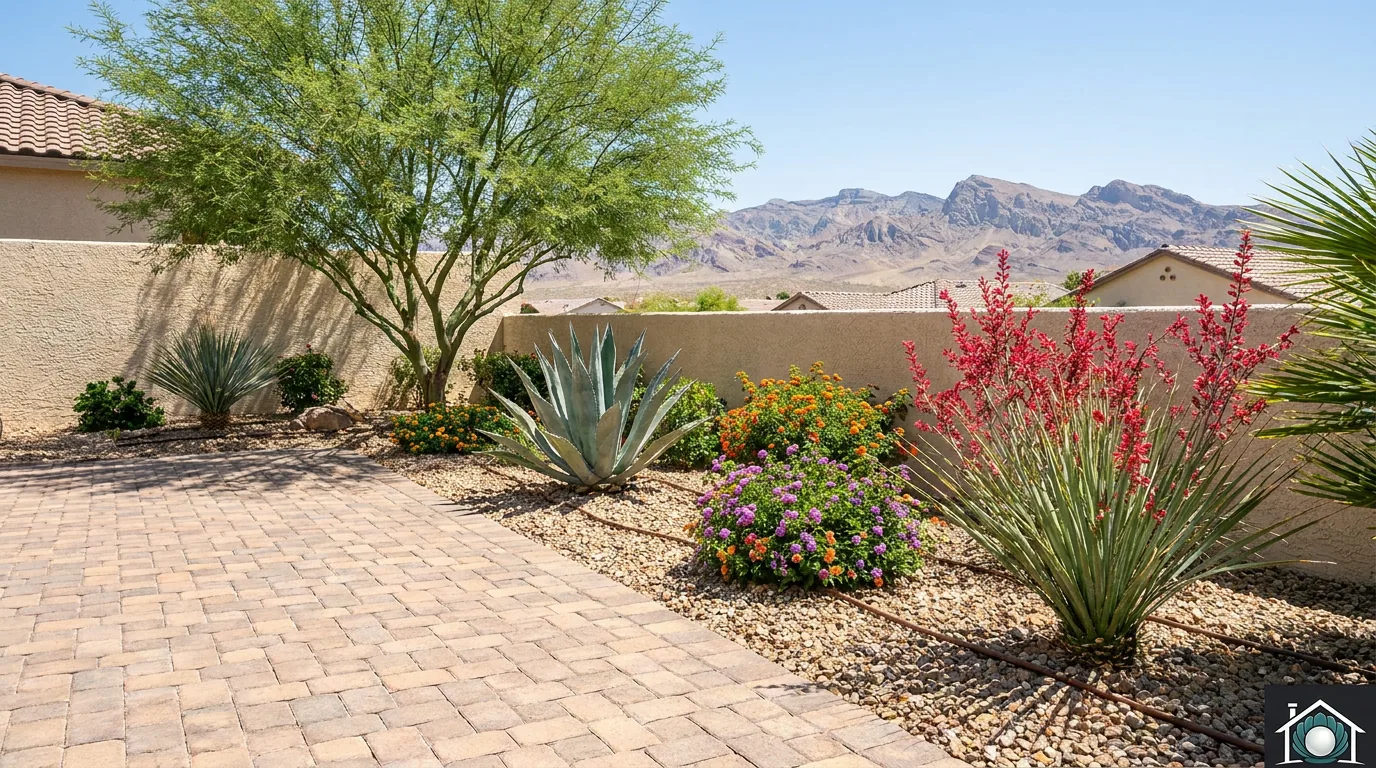
Structural plants carry the architectural weight of the design. The most reliable Summerlin performers in this category include several agave varieties (Agave americana, Agave parryi, Agave weberi), red yucca, desert spoon, Spanish dagger, blue yucca, and the various golden barrel cactus. These plants establish well, hold their form across seasons, and provide the strong geometric shapes that read as deliberate composition.
Color accent plants add the flowering interest that keeps the landscape from reading as a single-tone gravel garden. Lantana (purple, yellow, and orange varieties) blooms most of the year and tolerates heat exceptionally well. Autumn sage provides reliable late-season color. Desert marigold, blackfoot daisy, and chocolate flower offer different bloom timing. Mexican honeysuckle, bottlebrush, and ocotillo provide more upright color statements. Mix bloom timing so the landscape has color across multiple seasons rather than peaking briefly.
Ground cover and low spreading plants soften the design and reduce visible gravel. Trailing rosemary, lantana (low varieties), Mexican evening primrose, and dwarf yarrow all spread and fill space without being thirsty. The right ground cover transforms a sparse-looking landscape into one that feels lush and intentional.
Trees provide canopy and vertical scale. The most reliable Summerlin tree species are desert museum palo verde, Chinese pistache, willow acacia, and certain mesquite varieties. Avoid trees that drop heavy fruit (date palms, olive trees) near pools or patios where they create maintenance issues. Place trees thoughtfully relative to the home and patio - a well-placed tree on the southwest side of the yard provides afternoon shade that significantly reduces the cooling load on both the home and the patio.
Hardscape Choices That Complement Plants
Hardscape elements connect the patio to the landscape and create the structure that drought-tolerant designs need to read as composed rather than empty.
Decorative gravel (often called landscape rock or desert rock) fills the spaces between plants and creates the dominant ground texture. Color choice matters more than people expect. Lighter gravel colors (cream, beige, gold, light grey) reflect heat rather than absorb it, which keeps the planting zone cooler and reduces stress on plants. Darker gravel absorbs heat and can damage plants located close to it during peak summer. The size of the gravel also matters - 0.75 to 1.5 inch sizes are the standard for residential landscape; smaller sizes can wash into drainage paths during monsoon storms.
Paver pathways winding through the planted areas create visual flow and provide practical access to plants and irrigation valves. Match the paver material to the patio when possible for visual continuity, or use a complementary material for intentional contrast.
Boulders provide focal points and break up the visual rhythm of plants and gravel. A few well-placed boulders (3 to 6 in a typical backyard) add the geological depth that flat landscapes lack. Source boulders from local desert quarries for authenticity and matching color to the surrounding terrain.
Edging defines the transitions between gravel, planted areas, paths, and any remaining turf or hardscape. Metal edging (steel or aluminum) reads clean and contemporary. Stone edging reads more natural. Concrete curbs are functional but read as builder-grade.
Lighting transforms a drought-tolerant landscape from a daytime composition into a year-round feature. Path lights, accent uplights on feature plants and trees, and integrated step lighting create depth and atmosphere after dark. LED warm white (2700K to 3000K) is the standard - cooler color temperatures read clinical against natural materials.
SNWA Rebates and HOA Process
The Southern Nevada Water Authority Water Smart Landscape Rebate is one of the strongest financial incentives available for landscape conversion in the valley. The program covers a per-square-foot rebate for converting decorative turf to qualifying drought-tolerant landscape.
Specific rebate amounts and eligibility criteria change periodically - verify current details on the SNWA website or with your contractor before relying on rebate amounts in a project budget. The program typically requires minimum plant density (a specific number of plants per converted area), drip irrigation (not spray), specific gravel coverage standards, and a final inspection before the rebate is paid.
The rebate application is straightforward but specific. A reputable landscape installer who has done conversion projects before can navigate the application process efficiently, including submitting before-and-after photos and meeting the technical criteria.
HOA architectural review is required for all visible landscape changes in Summerlin’s master-planned communities. The architectural review committee typically maintains an approved plant palette, specific color guidelines for gravel and hardscape, edging requirements, and density standards (especially for front-yard conversions). Approval timelines run 2 to 6 weeks. Submit the design with a complete plant list, samples of gravel and hardscape materials, and a rendering or design drawing.
Common Mistakes That Make Drought-Tolerant Look Cheap
A few patterns consistently produce landscapes that read as low-effort rather than intentional:
- Insufficient plant density. A few isolated plants surrounded by vast areas of bare gravel looks like the project ran out of budget. Drought-tolerant designs need real plant volume to read as composed. Plan for the plants to cover roughly 40 to 60 percent of the ground area at maturity.
- Too few species. A landscape with one type of plant scattered through gravel reads as monotonous. Mix structural plants with color accents and ground cover for visual variety.
- All cacti, no soft texture. Cacti are striking but a landscape that uses only cacti reads as harsh. Mix in plants with softer textures - grasses, ground covers, leafy shrubs - to balance the architectural cacti.
- No height variation. A landscape where everything is the same height reads as flat and unintentional. Plan for plants at multiple heights from ground cover through medium shrubs to tall accent plants and trees.
- Dark gravel near plants. Heat-absorbing dark gravel stresses plants and reads heavy visually. Use lighter gravel in planting zones; reserve darker gravel for paths or accent areas away from sensitive plants.
- No lighting at night. A daytime-only landscape misses half its value. Even modest lighting transforms the space.
Maintenance Reality
The popular framing that drought-tolerant landscape is zero-maintenance is overstated. Maintenance is dramatically reduced compared to turf, but it is not zero:
The first year requires consistent drip irrigation for plant establishment. Plants need water until their roots reach deep into the soil; that takes a full growing season for most species. After establishment, drip irrigation runs less frequently but does not turn off entirely.
Periodic pruning keeps plants looking intentional rather than overgrown. Most drought-tolerant plants need light shaping once or twice a year. Cacti and succulents need minimal pruning; flowering shrubs and trees need more attention.
Gravel needs occasional top-up. Over years, gravel migrates from settling, foot traffic, and irrigation runoff. Adding 0.5 to 1 inch of fresh gravel every 4 to 6 years refreshes the visual.
Weed pressure is real even in drought-tolerant designs. Seeds blow in from neighboring properties, get carried in by birds, or remain in the soil from before the conversion. A weed barrier under the gravel reduces but does not eliminate weed pressure; periodic weed pulling or targeted herbicide application is part of the routine.
Plant replacement is occasional. Some plants will die unexpectedly - extreme cold snaps, irrigation failure, pest pressure. A well-installed landscape might lose 5 to 15 percent of plants in the first 2 years, then stabilize.
Annual maintenance cost for a well-designed drought-tolerant landscape typically runs 30 to 50 percent less than equivalent turf maintenance. Water cost reduction is much larger - often 60 to 80 percent of the original water bill.
Cost and Timeline
A drought-tolerant landscape installation paired with a Summerlin patio remodel typically follows this rough budget:
- Basic conversion (turf removal, drip irrigation, mid-density plant install, gravel): [$8 - $15 per square foot]
- Designed installation (denser planting, larger feature plants, lighting, hardscape elements): [$15 - $30 per square foot]
- Premium custom design (boulder work, specimen plants, integrated water features, full lighting): [$25 - $50+ per square foot]
A typical 1,500 square foot front yard or back yard conversion in Summerlin usually lands in the [$12,000 - $45,000+] range depending on scope. SNWA rebates can offset a meaningful portion of this on qualifying projects.
Project timeline is typically 2 to 4 weeks of active installation work for a standard conversion. Larger projects with significant hardscape elements run 4 to 8 weeks. The work is best scheduled in fall, winter, or early spring - planting in summer is possible but adds water-stress risk during establishment.
Bundling With Patio Work
The strongest argument for combining landscape conversion with a patio remodel is the savings on duplication. Site protection, equipment mobilization, irrigation work, and grading all happen once instead of twice. The landscape installer can coordinate gravel and hardscape colors with the patio material for visual continuity. The HOA submission can cover both projects in a single review cycle.
Pearl handles full backyard projects across Summerlin and the rest of the valley, including patio remodels with integrated landscape work. If you are planning a patio project and want to bundle landscape conversion to qualify for SNWA rebates and create a coherent outdoor space, request a free in-home consultation or call (702) 602-8385. We will walk the yard, talk through plant palettes that work, identify rebate opportunities, and put together a unified plan and quote.