Most homeowners ask this question after they have already pictured the new shower. The short version is that the permit depends on what is behind the walls, not on how big the remodel looks.
The Short Answer
You need a permit for a bathroom remodel when the work changes the plumbing, the electrical, the ventilation, or the structure. Moving a toilet, sink, tub, or shower even a short distance, relocating a drain, adding a circuit, or adding or moving a bath fan all need one. Cosmetic work generally does not: new tile, paint, mirrors, a vanity swapped in the same spot, or a toilet or faucet replaced on the existing rough-in.
In practice, most full bathroom remodels end up needing a permit, because almost any meaningful layout change touches a drain line. A refresh that leaves every fixture where it is usually does not.
| Bathroom work | Permit usually needed? |
|---|---|
| Retiling walls or floors, painting, new mirror | No |
| Replacing a toilet, faucet, or vanity on the existing plumbing | No |
| Replacing a light fixture on existing wiring | No |
| Moving a toilet, sink, tub, or shower | Yes |
| Tub-to-shower conversion | Usually yes (drain and valve change) |
| Rebuilding a shower down to the studs | Usually yes |
| Adding or relocating a bath fan | Yes |
| Adding outlets or circuits, heated floors | Yes |
| Removing or moving a wall, enlarging the room | Yes |
| Adding a new bathroom | Yes (building, plumbing, electrical) |
The table describes how building departments across the valley generally treat these jobs. Your exact scope decides it, so confirm with your building department or your contractor before demo starts.
Bathroom Work That Needs a Permit
Plumbing changes
Plumbing is where most bathroom permits come from. Any time a fixture moves, the drain, vent, and supply lines move with it, and that is new plumbing work. That covers sliding a toilet a couple of feet to make room for a wider vanity, turning a single sink into a double, moving a shower to the other wall, or swapping a tub for a walk-in shower with a linear drain.
Repairs are treated differently. Fixing a leak, clearing a stoppage, or pulling and resetting a toilet on its existing flange are repairs, not remodeling. But once a concealed drain or vent pipe has to be replaced, the building department treats it as new work, which needs a permit.
Shower and tub conversions
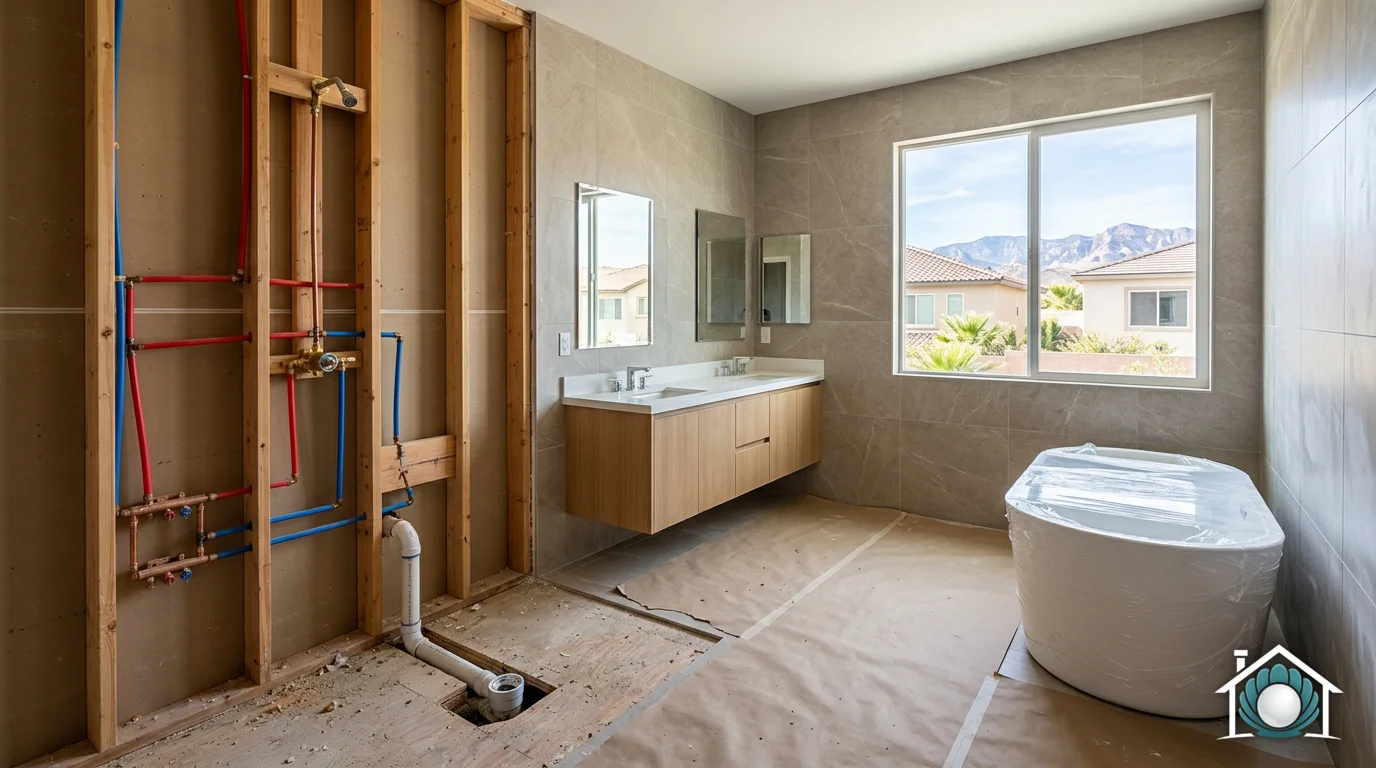
A tub-to-shower conversion looks simple from the outside, but it usually changes the drain size and position and moves the shower valve up the wall. A full shower rebuild also replaces the waterproofing behind the tile, which inspectors want to see before it gets covered. Both are almost always permitted jobs.
Electrical and ventilation
New circuits, GFCI upgrades on new runs, heated floors, lighted mirrors on a new circuit, extra recessed lights, and outlets in new locations all need an electrical permit. Bathrooms also need proper exhaust, and adding, upsizing, or relocating a bath fan is mechanical work that needs a permit. Older Las Vegas homes often have undersized fans or none at all, so this comes up more than people expect.
Structural changes
Taking out a wall to enlarge the bathroom, borrowing space from a closet, adding a window, or adding a whole new bathroom are structural changes. They need a building permit and usually plan review on top of the trade permits.
Bathroom Work That Usually Does Not Need a Permit
Cosmetic updates that leave the plumbing, wiring, and structure alone generally do not need a permit:
- Retiling floors, walls, or a shower surround, as long as the shower behind it is not being rebuilt
- Painting, new mirrors, towel bars, and accessories
- Replacing a vanity, sink, or faucet in the same location on the existing plumbing
- Replacing a toilet on the existing flange
- Swapping a light fixture or exhaust fan cover on existing wiring
Watch for the gray areas. A new vanity is permit-free until it needs a new outlet. A tile job is permit-free until the old shower pan turns out to be rotted and the drain has to be replaced. Gray areas like these are why the permit decision belongs at the start of the project, once someone has looked at what is actually there.
Who Pulls the Permit
When a licensed contractor runs the remodel, the contractor should pull the permit. The contractor is then legally responsible for the work meeting code, schedules the inspections, and fixes anything that fails. The permit fee should appear as its own line on the quote.
Nevada does allow owner-builder permits for work on your own home that you live in. The trade-off is that you become the person responsible for code compliance and inspections. Under Nevada’s contractor law, selling the home within a year of finishing the work can be presumed to mean it was done to sell, which takes away the owner-builder exemption. Owner-builder permits fit small jobs a homeowner does personally. They are a poor fit for a remodel run by a contractor.
One red flag to know: a contractor who suggests you pull a homeowner permit so they do not have to. That shifts the liability onto you while they do the work. You can check any contractor’s license with the Nevada State Contractors Board.
What It Costs and How Long It Takes
Permit fees across the valley are calculated from the declared value of the work plus per-trade fees for plumbing, electrical, and mechanical. A typical bathroom permit package usually runs about $500 to $2,500. A small hall-bath update sits at the low end, and a primary-suite remodel with relocated fixtures sits at the high end. Re-inspection fees apply if an inspection fails and the inspector has to come back.
The timeline usually matters more than the fee:
- Submission. Your contractor submits the scope, and drawings if plan review is needed.
- Plan review. Usually about 2 to 6 weeks for a bathroom. Simple trade permits can issue over the counter the same day.
- Corrections. If the reviewer sends comments back, each round can add 1 to 3 weeks. A complete first submission avoids most of this.
- Inspections during the work. Typically rough plumbing and electrical before the walls close, shower pan or waterproofing before tile, and a final at the end.
A good contractor submits the permit while you are still choosing tile and waiting on the vanity, so the permit is not the thing holding up demo. For the bigger picture of a bathroom schedule, see our guide to bathroom remodel timelines.
Bathroom Permits in Henderson and the Rest of the Valley
Which office issues your permit depends on your physical address, not your mailing address. Homes in the City of Henderson go through Henderson’s Building and Fire Safety department, which takes permit applications and plans online through its DSC Online portal and offers a virtual counter for permits that qualify for over-the-counter review. Henderson’s own timeline and fee schedule apply, so if you are planning a bathroom remodel in Henderson, the permit runs through the city, not the county.
The rest of the valley is split. The City of Las Vegas and the City of North Las Vegas run their own building departments. Large parts of Summerlin, Paradise, and Spring Valley are unincorporated Clark County, even with a “Las Vegas, NV” mailing address, so those permits go through the Clark County Department of Building and Fire Prevention. The Clark County Assessor’s parcel lookup will confirm which jurisdiction you are in. Our guide to remodel permits in Clark County has the full jurisdiction table.
HOA approval is separate from the permit. Interior bathroom work rarely needs it, but a new window or any exterior change usually goes through your community’s architectural review as well.
What Happens If You Skip the Permit
Unpermitted bathroom work tends to come back at the worst time. If the building department finds out mid-project, the work gets red-tagged and stopped, and finished walls may have to be opened for inspection. At resale, unpermitted bathroom work is one of the most common findings on Las Vegas inspection reports, and buyers use it to ask for repairs or a lower price. Some insurers also push back on claims tied to unpermitted plumbing or electrical work.
Against a $500 to $2,500 permit package, none of those outcomes is worth the risk.
Plan the Permit Before the Tile
If you are planning a bathroom remodel and are not sure whether your scope needs a permit, the answer usually comes from a short walk-through: what moves, what stays, and which jurisdiction your home is in. Pearl handles the permit as part of every bathroom remodel we take on, from submission to final inspection. Request a free in-home consultation or call (702) 602-8385 and we will tell you exactly what your project needs.