Choosing new flooring is one of the most impactful decisions you can make during a home renovation. In Las Vegas, that decision carries extra weight. The desert climate, extreme summer temperatures, low humidity, and fine dust all play a role in how different flooring materials perform over time. A floor that works beautifully in Portland or Atlanta might buckle, fade, or crack within a few years here in the valley.
This guide breaks down three of the most popular flooring choices for Las Vegas homes: ceramic and porcelain tile, luxury vinyl plank (LVP), and hardwood. We will look at durability, comfort, energy efficiency, maintenance, and cost so you can make a confident choice for your next remodel.
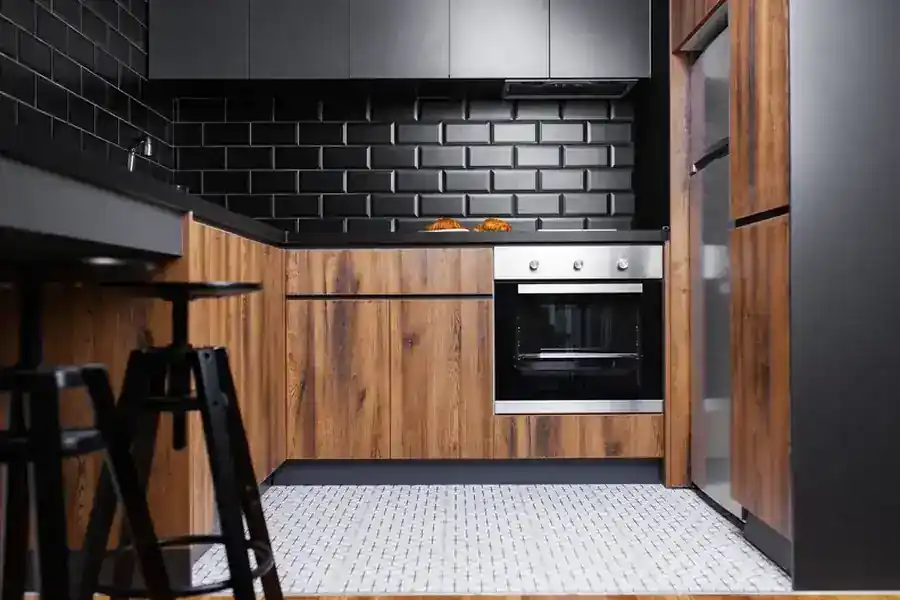
Ceramic and Porcelain Tile
Tile has been a staple in Las Vegas homes for decades, and for good reason. It handles heat exceptionally well. Porcelain and ceramic tile stay cool underfoot, which is a genuine comfort advantage when outdoor temperatures push past 110 degrees in July and August.
Durability in the Desert
Tile is one of the hardest flooring surfaces available. It resists scratches, dents, and moisture. Porcelain tile in particular has a very low water absorption rate, making it suitable for kitchens, bathrooms, laundry rooms, and entryways. It will not warp or swell from the occasional monsoon moisture that sneaks indoors.
The biggest vulnerability with tile is cracking from impact. Dropping a heavy pan or a piece of furniture can chip or crack a tile. However, individual tiles can be replaced without redoing the entire floor if you keep extras from your original installation.
Energy Efficiency
Tile pairs exceptionally well with radiant floor heating systems. During the brief Las Vegas winter, radiant heat under tile provides even warmth throughout a room. In summer, tile naturally stays cooler than most other flooring types, reducing the load on your air conditioning system. Over a full year, tile flooring can contribute to modest energy savings compared to carpet or some engineered products.
Cost Considerations
Basic ceramic tile starts around $2 to $4 per square foot for materials, while quality porcelain runs $4 to $8. Installation typically adds $5 to $10 per square foot depending on pattern complexity and subfloor preparation. Large-format tiles and intricate layouts cost more to install but create a striking visual impact.
Best Rooms For Tile
Tile works well in every room, but it is especially strong in kitchens, bathrooms, entryways, and living areas with direct sunlight exposure. Many Las Vegas homeowners also use tile on covered patios and in pool areas for a seamless indoor-outdoor transition.
Luxury Vinyl Plank (LVP)
Luxury vinyl plank has surged in popularity across the Las Vegas valley over the past several years. Modern LVP products look remarkably close to real wood or stone, and they address many of the practical concerns that come with living in the desert.
Durability in the Desert
High-quality LVP is built to handle heavy foot traffic, pets, and the occasional spill. Most products feature a rigid core construction (often called SPC or stone polymer composite) that resists denting and does not expand or contract significantly with temperature changes. This dimensional stability is critical in Las Vegas, where indoor humidity levels can swing from very low in winter to moderately higher during monsoon season if you use evaporative cooling.
LVP is also waterproof, making it a practical choice for bathrooms, kitchens, and laundry rooms. Unlike laminate flooring, which can swell at the seams when exposed to moisture, quality LVP handles water without damage.
Comfort and Feel
One area where LVP outperforms tile is underfoot comfort. The rigid core with an attached underlayment provides slight cushioning that reduces fatigue when standing for long periods. This makes it a popular choice for kitchens where you spend time cooking and cleaning.
LVP is also quieter than tile. Dropped items produce less noise, and footsteps are softer. For families with children or pets, this acoustic advantage is worth considering.
Cost Considerations
LVP typically costs $3 to $7 per square foot for materials. Installation runs $3 to $6 per square foot, often less than tile because LVP is lighter and faster to install. Many products use a click-lock system that does not require adhesive, which speeds up the process and reduces labor costs.
For homeowners working within a moderate budget, LVP often delivers the best balance of appearance, performance, and price.
Best Rooms For LVP
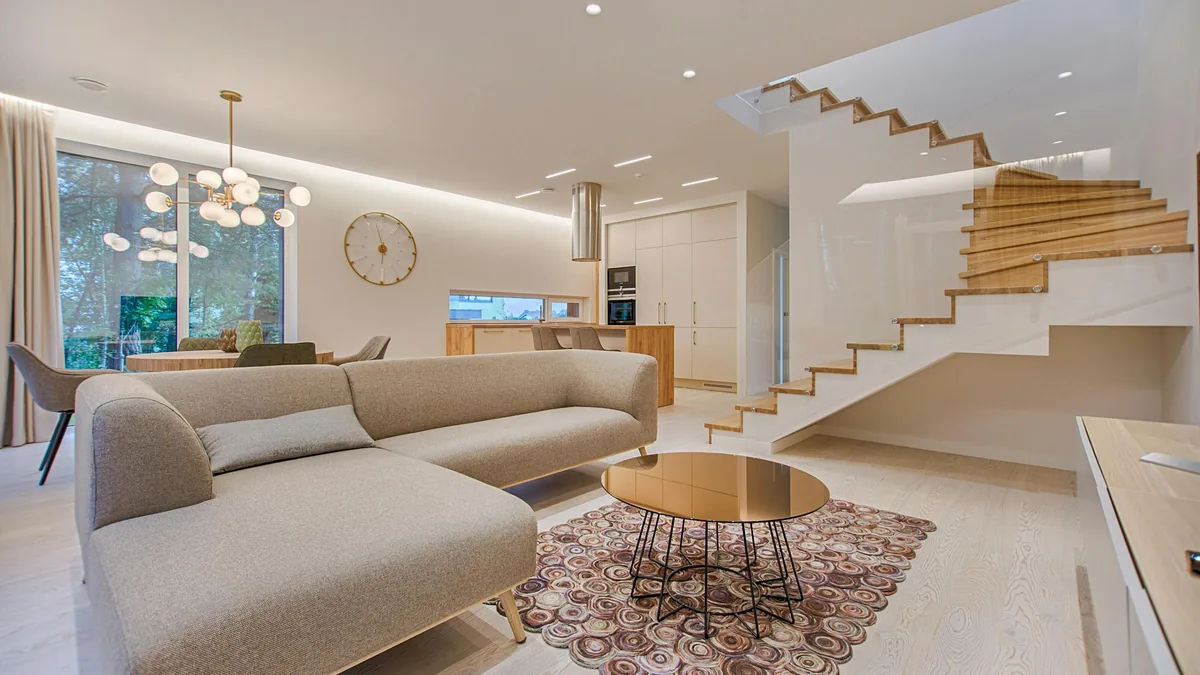
LVP works throughout the entire home. It is especially popular in open-concept living spaces where homeowners want a continuous floor surface from the kitchen through the dining area and into the living room. It also performs well in bedrooms where tile might feel too cold or hard.
Hardwood Flooring
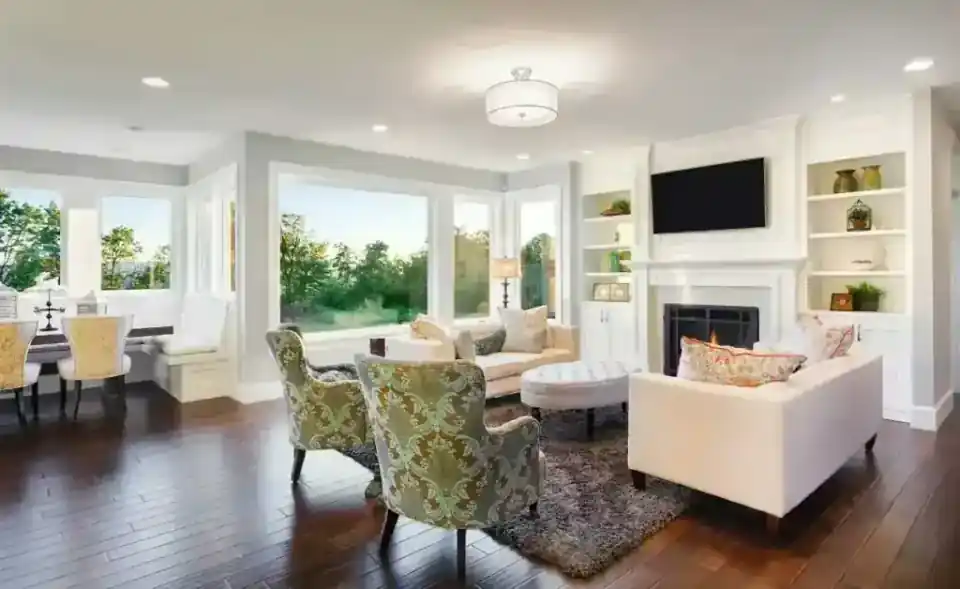
Hardwood remains the aspirational choice for many homeowners. The warmth, character, and natural beauty of real wood flooring is difficult to replicate, even with the best LVP products. However, hardwood requires more careful consideration in the Las Vegas climate.
Durability in the Desert
The primary challenge with hardwood in Las Vegas is the extremely low humidity. Indoor relative humidity in valley homes often drops to 10 to 15 percent during winter months, well below the 35 to 55 percent range that most hardwood manufacturers recommend. At those low levels, wood shrinks, and gaps appear between planks. Over time, repeated cycles of shrinking and minor expansion can cause cupping, cracking, or finish failure.
Engineered hardwood performs significantly better than solid hardwood in this environment. Engineered products feature a real wood veneer bonded to a plywood or composite core, which resists expansion and contraction much more effectively than a solid plank. If you have your heart set on hardwood, engineered is the clear choice for a Las Vegas home.
Maintenance Requirements
Hardwood floors need more maintenance than tile or LVP. You should monitor indoor humidity levels and consider running a whole-house humidifier during the driest months. Regular sweeping is essential because the fine desert dust that works its way indoors can scratch the finish over time. Refinishing is possible with engineered hardwood (depending on veneer thickness), but it adds long-term maintenance costs.
Cost Considerations
Solid hardwood ranges from $6 to $12 per square foot for materials, while engineered hardwood runs $5 to $14 depending on species and veneer thickness. Installation costs $6 to $12 per square foot. When you factor in the potential need for a humidification system and periodic refinishing, hardwood carries the highest total cost of ownership among these three options.
Best Rooms For Hardwood
If you choose hardwood in Las Vegas, keep it in climate-controlled interior spaces. Living rooms, dining rooms, and bedrooms are reasonable choices. Avoid hardwood in kitchens, bathrooms, and any room with direct sun exposure through large windows, as UV light accelerates fading and finish breakdown.
Side-by-Side Comparison
| Factor | Tile | LVP | Hardwood |
|---|---|---|---|
| Heat resistance | Excellent | Good | Fair |
| Moisture resistance | Excellent | Excellent | Poor to Fair |
| Low-humidity stability | Excellent | Very Good | Fair |
| Comfort underfoot | Cool and hard | Moderate cushion | Warm and moderate |
| Maintenance | Low | Low | Moderate to High |
| Material cost (per sq ft) | $2 - $8 | $3 - $7 | $5 - $14 |
| Installation cost (per sq ft) | $5 - $10 | $3 - $6 | $6 - $12 |
| Lifespan | 25 - 50+ years | 15 - 25 years | 20 - 40+ years |
Making the Right Choice for Your Home
There is no single best flooring for every Las Vegas home. The right choice depends on your budget, lifestyle, and design priorities.
If durability and low maintenance are your top concerns, tile is hard to beat. It handles the desert climate without complaint and offers the widest range of design options, from modern large-format slabs to traditional patterns.
If you want the look of wood at a lower price point with excellent all-around performance, LVP is a strong contender. It installs quickly, holds up well in every room, and comes in realistic finishes that satisfy most homeowners.
If natural wood is a must-have for your design vision and you are willing to invest in climate control and ongoing maintenance, engineered hardwood can work in Las Vegas. Just go in with realistic expectations about the care it will require.
Whatever direction you choose, working with a remodeling contractor who understands the specific demands of the Las Vegas climate will help you avoid costly mistakes. Proper subfloor preparation, acclimation of materials, and correct installation techniques all matter more here than in milder climates.