Henderson summers are not subtle. From mid-June through early September the high regularly clears 105 degrees, and the back of the house turns into a heat trap unless the patio is designed to fight back. The good news is that a well-planned outdoor space can stay genuinely usable through the worst of it - shaded, breezy, and 15 to 25 degrees cooler than the open yard.
If you are planning a backyard remodel in Henderson this summer, the choices you make about shade, flooring, ceiling fans, and orientation matter more than the choice of furniture or the color of the cushions. Here is what actually works in this climate, and what to avoid.
Start With the Shade Structure
The single biggest factor in whether a patio is usable in July is whether it has solid overhead shade. Open pergolas and lattice covers look great in renderings, but in Henderson they leave the seating area in full sun for most of the afternoon. By the time you add shade fabric or polycarbonate panels on top, you are most of the way to a solid cover anyway.
Three options dominate Henderson backyards:
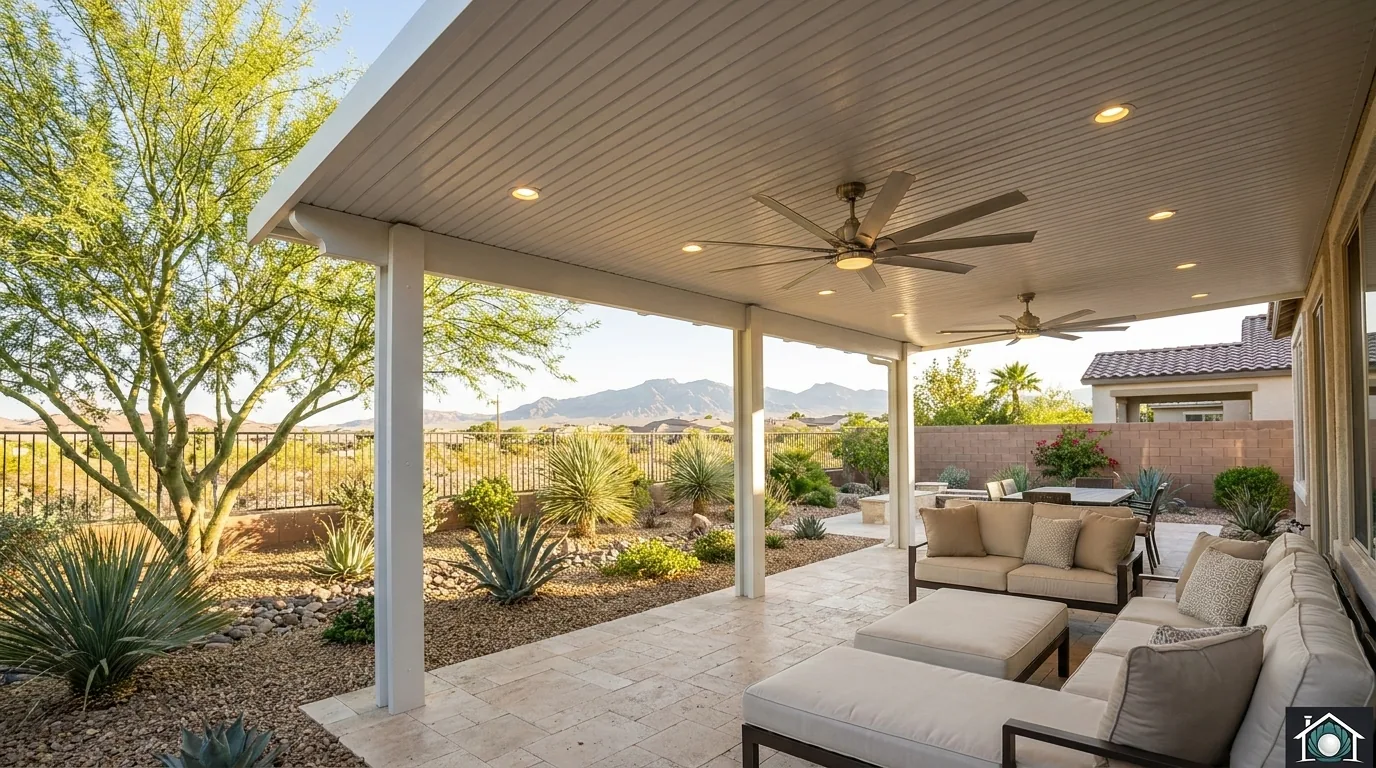
- Insulated aluminum patio covers. Lightweight, factory-finished, and engineered to span large openings without intermediate posts. The insulated panels reflect heat and dampen rain noise. They accept fans, recessed lighting, and outdoor speakers cleanly, and they install in days rather than weeks.
- Stucco-finished solid covers. Built to match the home’s exterior so they read as part of the architecture rather than an add-on. More expensive and slower to build, but they add resale value and let you fully integrate lighting, fans, and finishes.
- Wood pergolas with shade panels. A pergola gives you the slatted, architectural look while polycarbonate or shade-cloth panels above the slats block the actual sun. A reasonable hybrid if you want the pergola aesthetic without giving up function.
Pricing varies widely depending on size, post count, electrical, and whether the structure ties into the existing roof. A basic insulated aluminum cover typically falls in the [$6,000 - $14,000] range. A custom stucco-finished structure with lighting, fans, and full electrical usually runs in the [$18,000 - $40,000] range. Always ask your contractor for itemized pricing rather than a single bottom-line number.
Pick a Patio Floor That Does Not Bake
The patio surface absorbs heat all day and radiates it back into the seating area for hours after the sun moves off. In Henderson this is the difference between a patio you walk barefoot on and one that keeps your dog inside.
What works in this climate:
- Light-colored porcelain pavers. Modern, clean, and engineered to stay dimensionally stable through the seasonal temperature swing. Light grey, beige, and bone tones are the most common.
- Travertine. Naturally porous, reflects rather than absorbs heat, and has been the default for pool decks across Henderson for years for exactly this reason. Looks high-end and ages well.
- Stained or painted concrete in a light tone. Budget-friendly and effective. A light topcoat on existing concrete can drop surface temperature significantly compared to bare grey slab.
What to avoid in any sun-exposed area: dark grey or black pavers, dark stained concrete, and untreated brick. They look great in spring photos and become unusable by the end of June.
If you already have a dark patio you do not want to tear out, a covered structure overhead plus a light area rug or shade sail extending the cover line is a reasonable mid-step.
Ceiling Fans Are Not Optional
Once the patio is shaded, the next problem is still air. Henderson summer afternoons regularly hit triple digits with very little natural breeze, especially in interior backyards walled in by neighbors. A pair of properly sized outdoor ceiling fans changes the experience completely - moving air across skin makes the perceived temperature drop by 4 to 8 degrees on its own.
A few practical notes:
- Use fans rated for damp or wet locations, not interior fans. Indoor fans corrode and fail within a season or two outdoors.
- Pick a fan blade span that matches the seating area: 52-inch fans for an average seating zone, 60-inch or 72-inch fans for larger covers or dining areas.
- Wire the fan with a wall switch and a remote. The remote gets used; a pull chain at 9 feet up does not.
- Pair fans with a misting system if you want all-day usability, not just morning and evening.
If your patio cover does not currently have electrical, a remodel is the right time to add it. Running conduit, GFCI outlets, and switch legs costs much less when the cover is already open or being built than retrofitting later.
Misting Systems That Actually Work
A high-pressure misting system uses fine atomized water that evaporates before it lands, dropping the surrounding air temperature by 15 to 25 degrees. The cheap garden-hose kits sold at big-box stores are not the same product - they produce drops large enough to soak the patio, the furniture, and the dog. They are not a serious solution.
A real misting system uses a pump that builds 800 to 1000 PSI of pressure and stainless steel nozzles spaced along the perimeter of the patio cover. Installed cleanly, the lines hide along the inside edge of the cover and the nozzles are barely visible. Operated on a timer or smart switch, the system can hold a 95-degree patio at 75 to 78 degrees for an outdoor lunch.
Pricing for a quality high-pressure system typically falls in the [$1,500 - $4,500] range depending on patio size and pump capacity. It pays for itself in usability if you actually want to entertain or eat outside in July.
Orientation, Walls, and Long-Term Shade
Most Henderson backyards face west or south, which means the worst heat lands on the patio in late afternoon - exactly when people want to be outside. Where possible, design the seating zone away from direct west exposure. A short stucco knee wall or a vertical screen on the southwest edge of the patio can block low afternoon sun without enclosing the space.
For long-term improvement, plant evergreen shade trees on the southwest side of the yard. Desert museum palo verde, Chinese pistache, and certain mesquite varieties grow well in Henderson and provide real shade within 4 to 7 years. They also reduce the heat load on the home itself, which lowers cooling costs over time. A landscape architect or your remodeling contractor can advise on placement so the trees do not interfere with the patio cover footing or the home’s foundation.
Lighting for Evenings That Run Late
By 8 PM most Henderson summer evenings are perfectly comfortable, often the best part of the day. Layered patio lighting extends usable hours past sunset:
- Recessed downlights in the patio cover for general illumination.
- String lights or festoon lights along the perimeter for ambiance.
- Path or step lighting on grade changes around the patio.
- Accent uplights on shade trees or feature walls.
- Pool deck lighting if the patio extends to the pool.
LED is the only sensible choice for new outdoor lighting in this climate - lower heat, longer lifespan, and lower energy load on the home. Warm color temperatures in the 2700K to 3000K range feel more inviting than the cool blue-white tones often found in builder-grade fixtures.
Common Henderson Patio Layout Mistakes
A few patterns we see come up over and over in older Henderson homes that need a remodel:
- Cover too small. Builder-grade covers are often 10 by 12 feet or smaller. Once you put a table and four chairs under it, there is no room for a separate seating zone. Plan for the cover to be larger than you think you need.
- No electrical at the cover. Adding fans, lights, or a TV after the fact requires running conduit through finished surfaces. Plan electrical from the start.
- Single-zone design. A single seating area locks you into one use case. Even on a modest patio, splitting into a dining zone and a lounging zone with a clear traffic path between them gets used much more.
- No transition from kitchen. If the patio is meant for entertaining, the path between the kitchen and the patio should be obvious and unobstructed. A widened door opening or a serving counter built into the cover makes a real difference.
- Skipping the HOA review. Most Henderson master-planned communities require architectural review before any structural backyard work. Skipping it can mean tearing out completed work.
What to Expect From a Patio Remodel
A straightforward patio cover install typically takes 1 to 3 weeks once permits are issued. A full backyard project that includes a new concrete or paver patio, cover, electrical, lighting, and finishes usually runs 4 to 8 weeks of active work. Permit issuance through the City of Henderson and HOA architectural approval can add 2 to 6 weeks on the front end depending on the community.
The right time to start a project meant to be enjoyed this summer is in early spring - by April at the latest. If you are reading this in May or June and want a real patio in time for September entertaining, that is still very achievable, especially for cover-only or surface-refresh projects.
If you are weighing options and want to talk through what makes sense for your yard, our team handles outdoor living projects across Henderson and the rest of the valley. Request a free in-home consultation or call (702) 602-8385 and we will walk the yard with you, look at sun exposure, and put together a realistic plan.